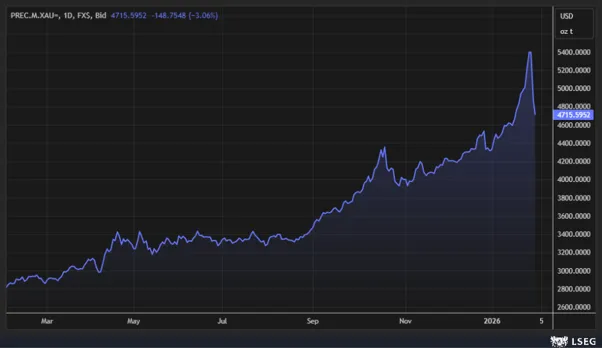
That move was also likely amplified by changes to the structure of CME margin requirements which were moved to a percentage-based system for precious-metals earlier in January. As gold and silver prices began to fall, this will have contributed to forced selling among leveraged traders. The combination of the Warsh news and the mechanical impact of margin calls creating a cascade effect that turned a normal correction into something more violent.
But not much has changed in our assessment of gold for the T. Bailey Multi-Asset portfolios. It seems unlikely, for example, that central banks will turn back to favouring US Treasuries now that the gold price is materially lower. Central banks continue to accumulate gold at historically elevated rates, with official sector purchases running above 800 tonnes annually as emerging market reserve managers pursue de-dollarisation and seek sanction-resistant assets.
Equally important, the fiscal backdrop remains supportive. Government debt burdens across developed markets continue to expand, deficits are wide despite economies operating near full employment, and the term premium embedded in long-dated bonds is rising as investors demand compensation for holding sovereign debt in an era of persistent fiscal dominance. This environment, characterised by large-scale monetary stimulus, negative real yields in many jurisdictions, and ongoing questions about the sustainability of current fiscal trajectories, provides a structurally favourable setting for non-yielding, inflation-sensitive assets like gold.
Nonetheless, we remain attentive in our exposure to the metal. Recognising that the rally had become extended and consolidation was overdue, we trimmed gold exposure in the T. Bailey Multi-Asset funds early on Friday to around 5.5%. Whilst the speed and violence of the move exceeded our expectations, the decision to lock in gains proved prudent. Moreover, the flush out of leveraged longs clears out weak hands, resets technical indicators that had reached extreme overbought levels, and establishes a more solid foundation to build on.