US federal debt has passed $40 trillion as long-dated government bond yields climb across developed markets. With investors demanding greater compensation for fiscal and inflation risks, the consequences extend beyond bond markets to borrowing costs, government finances and portfolio construction.
Long-dated bond yields have been climbing across most of the developed world, and the US Treasury's attempt to talk its own yields back down didn't hold for long this week. The fundamental question is what happens if investors become less willing to finance persistent fiscal deficits at low rates.
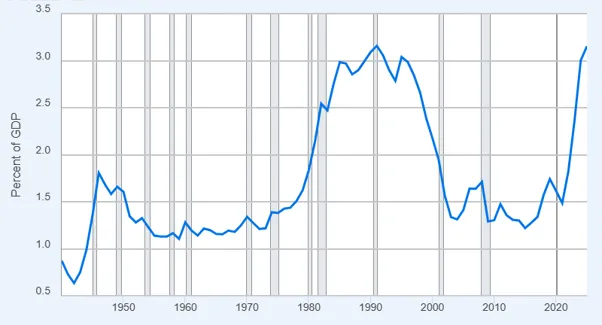
US gross federal debt passed US$40 trillion this week, having roughly doubled since 2017. The statutory debt ceiling now stands only a little above this, at US$41.1 trillion, and on current estimates may need to be revisited between late winter and mid-summer 2027.
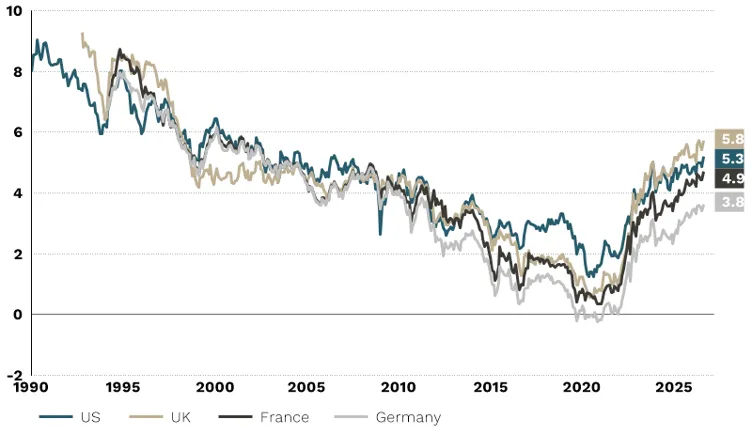
This week’s more immediate story in financial markets, though, was the level of long-dated yields. Thirty-year US Treasury yields briefly touched around 5.3%, their highest level since 2007. These longer-dated yields reflect a range of factors: expected short-term rates, compensation for inflation, and a term premium for the uncertainty of holding debt over decades. Of these, the dominant driver of the recent rise appears to have been the term premium.
This is not solely a US phenomenon. Of late, long-dated yields have risen across many major developed markets, not least the UK, though the scale and precise causes differ somewhat by country.