The immediate energy shock may ultimately prove manageable, but its longer-term consequences could be harder to escape. Persistently higher energy costs, structural demand for gold and renewed pressure on UK public finances all point to an investment environment where inflation protection and diversification remain important.
There is a version of the current crisis that is manageable. The conflict proves short-lived, the Strait of Hormuz gradually reopens, oil prices retrace a good part of their recent rise, and the global economy absorbs the blow with a period of below-trend growth and temporarily elevated inflation before recovering through 2027. Central banks hold their nerve, second-round wage effects remain contained by labour markets that lack the tightness of 2022, and the episode joins the lengthening list of supply-side scares that proved less catastrophic than feared. That is a plausible outcome, and it would be irresponsible to dismiss it. It is not, however, the whole story.
What makes this shock potentially more damaging than a straightforward energy price event is the nature of the transfer it forces. Higher energy costs do not destroy spending power so much as redirect it away from the goods, services, and investments that drive productive activity, and towards oil and gas producers, most of whom sit well outside the economies bearing the cost. That dynamic is familiar from previous cycles, but it is more corrosive when growth is already thin. Sentiment surveys in Europe and the UK are already softening, and the full squeeze has not yet arrived: petrol prices are rising sharply, and reports suggest the Ofgem price cap may increase by around 20% in July. The deeper concern is not the immediate shock but the possibility that a persistent drain on household incomes keeps growth weak long after the crisis itself is resolved.
The near-term forecasts for inflation are reasonable as far as they go - energy prices rise, peak somewhere, and eventually come back. The more uncomfortable question is what they might normalise back to. Gold has been in a bull market for the past eighteen months, and the buyers driving it have not primarily been nervous Western investors. Emerging market central banks have been accumulating gold consistently and in scale, diversifying away from the US dollar reserves they would otherwise hold. It is not difficult to understand why: they have watched Western governments borrow at a pace that has few peacetime precedents whilst Western central banks have held interest rates at near zero for years, and they have drawn their own conclusions about where this eventually leads. A gold price underpinned by that kind of deliberate, structural demand is a signal about long-term inflation risk that energy forecasts alone do not capture - and one that argues for holding inflation protection as a matter of conviction.
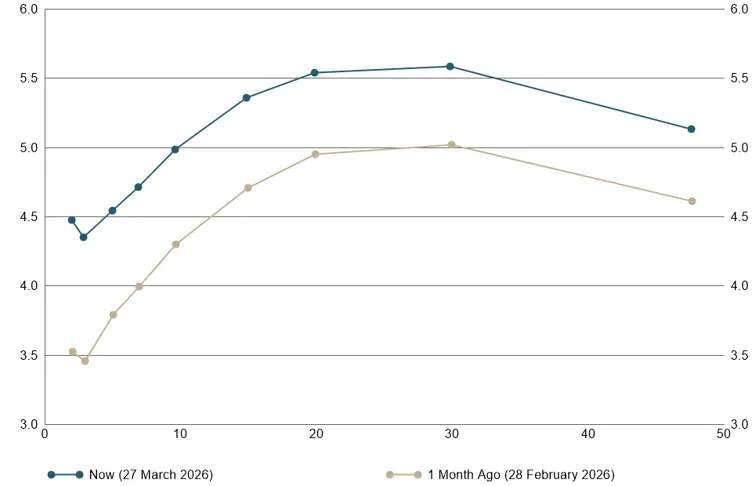
For UK based investors, this anxiety has a further dimension. The violent repricing of gilts since the conflict began reflects not only the prospect of higher inflation but whether the government can afford a credible household support package, whether public finances that were already stretched can absorb another energy crisis without a market reaction, and whether the present government itself is stable. Money markets have swung from pricing rate cuts to pricing as many as four quarter-point hikes through 2026, a dramatic reversal that most economists regard as excessive. The growth damage from an energy shock landing on a stagnant economy with a weakening labour market will suppress the wage growth that would be needed to justify tightening. We think the market has gone too far, and that gilt yields will fall back as those expectations unwind. But knowing that does not make the near-term straightforward - the UK's fiscal vulnerabilities and political uncertainty are real, and the path lower is unlikely to be a smooth one.