Legal challenges to US President Trump's tariff authority created more fodder for financial markets to digest this week. A US International Trade Court ruled that most of Trump's reciprocal tariffs exceeded presidential authority and were "illegal and void", though an appeals court stay meant tariffs have remained in effect pending further legal proceedings.
The US administration quickly signalled its intention to pursue alternative legal avenues, including Section 122 of the 1974 Trade Act, which would allow tariffs up to 15% for 150 days on countries with large trade surpluses. This legal uncertainty created a whipsaw effect in markets, with investors struggling to price in the ultimate outcome of what could become a protracted US Supreme Court battle.
However, the Trump administration's pursuit of alternative tariff mechanisms under various trade acts suggests that, regardless of court outcomes, some form of protectionist measures will likely remain.
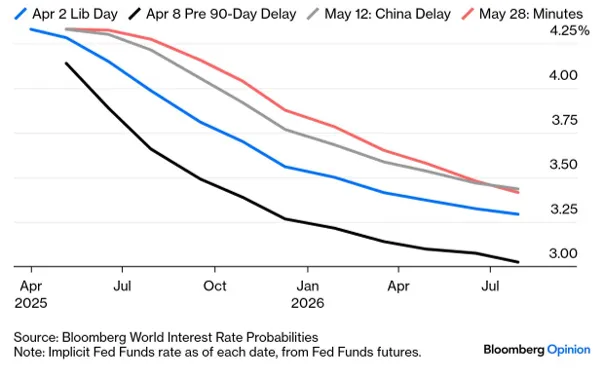
The release of May meeting minutes from the US Federal Reserve, and commentary from New York Fed President John Williams, revealed heightened concern among policymakers about persistent inflation risks, particularly given the potential for tariff-driven price pressures. This hawkish tone effectively ruled out near-term rate cuts. Meanwhile, the Fed's preferred PCE inflation measure cooled to 2.1%, providing some relief, though consumer spending growth slowed to just 0.2% as the savings rate surged to 4.9%.