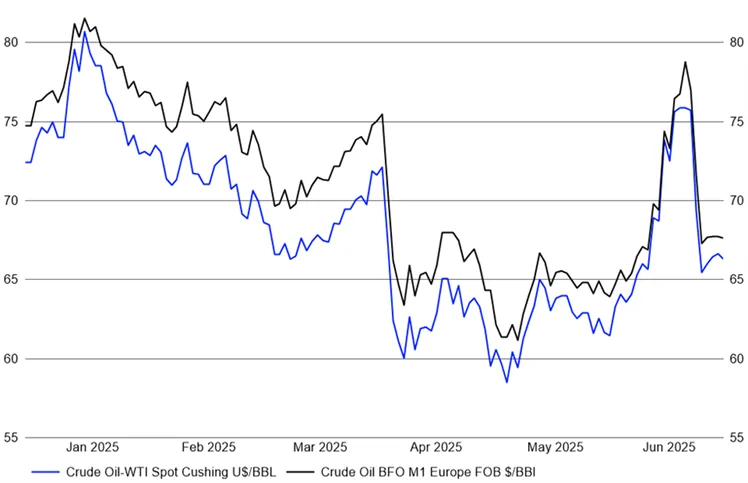
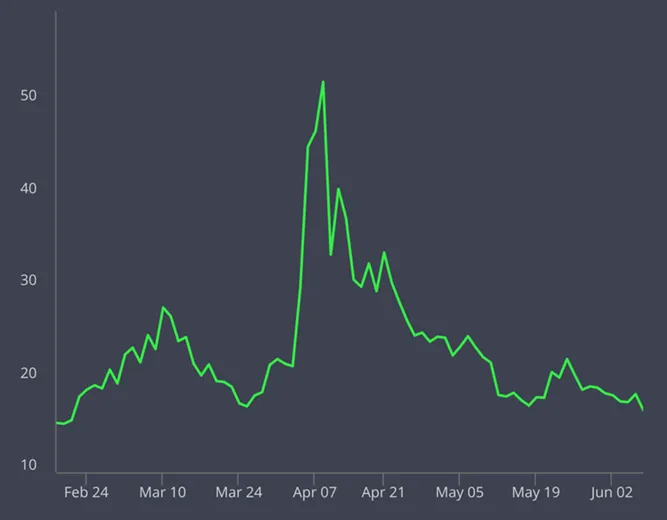
The swift rise and fall in oil prices provided little cause for concern on inflation which continued its gradual decline. Nonetheless, the US Federal Reserve held interest rates steady at 4.5%, signalling a cautious stance amid conflicting pressures from persistent price levels and political demands for stimulus. Meanwhile, in the UK, inflation printed at 3.4% in May – remaining well above the Bank of England’s 2% target - leading to a similar decision to hold rates at 4.25%. Other central banks took divergent paths. The Swiss National Bank cut rates to zero to counter deflationary risks and currency strength, while the Bank of Japan reaffirmed its ultra-loose stance, opting to slow the pace of its bond purchases.
The impact of artificial intelligence as a secular deflationary force came sharply into view with Amazon announcing sweeping workforce reductions on the back of AI driven efficiencies. Similarly, it was reported major accountancy firms in the UK have scaled back graduate recruitment in favour of automation. The economic consequences of such shifts are just beginning to be felt, but for investors, it reinforces the case for targeted exposure to innovation. Our allocation to the Polar Capital Artificial Intelligence Fund, the best-performing equity fund across the T. Bailey fund of funds portfolios this month with a 8.8% gain in GBP terms, continues to validate this conviction.
Elsewhere, in the T. Bailey multi-asset funds, we took steps to further refine our portfolio positioning. In particular, narrow spreads in high yield debt have prompted us to reallocate towards an absolute return approach through the newly launched Man Credit Opportunities Alternative Fund. Its flexible mandate - allowing for both long and short exposures - offers a more adaptive risk profile for an environment where static positioning offers little reward. This is part of a broader commitment to preserving capital while remaining opportunistic.