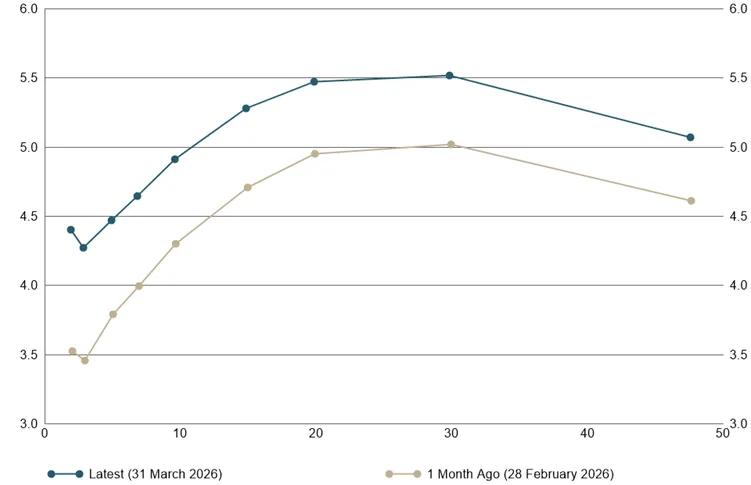
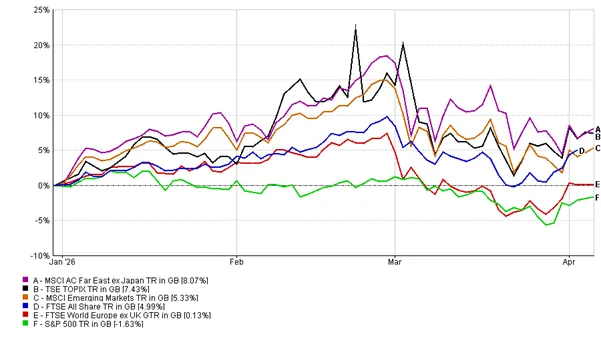
A major energy shock drove volatility and raised stagflation concerns. Markets reacted to shifting economic expectations.
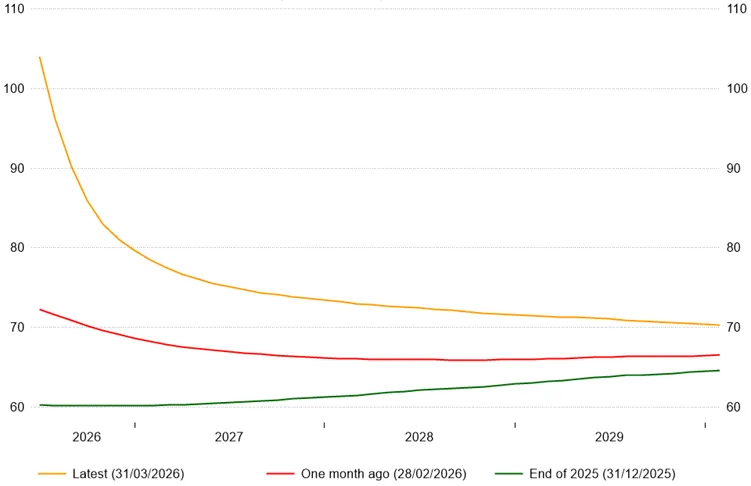
March was the month that a risk many had been watching from a distance arrived at full force. The US and Israeli military campaign against Iran, launched at the end of February, escalated into something far more consequential than most anticipated. The Islamic Revolutionary Guard Corps declared the Strait of Hormuz closed - a waterway that in normal times carries roughly a fifth of global oil supplies and a substantial share of liquefied natural gas (LNG) flows. Qatar shut down LNG output entirely, warning that restoring production would take weeks even when a decision to resume was made. Iraq cut around 1.5 million barrels per day as regional storage filled and export routes seized shut. Brent crude, which had closed February in the low US$70s per barrel, pushed above US$90 the following week.
The energy shock was not limited to oil. European natural gas prices surged sharply, with the Dutch TTF benchmark briefly approaching €61 per megawatt-hour, nearly double its level at the start of the conflict, as buyers scrambled to replace Qatari LNG.
For Europe and energy-importing Asia, the combination of higher oil and gas costs represented a genuine terms-of-trade shock rather than a temporary market disruption.
What followed was a month of disorienting swings. Brent briefly spiked towards US$120 on the night of 9 March before crashing back below US$90 within hours, after President Trump described the war as ending "very soon." Within days Iran had effectively re-closed the Strait and oil was back above US$100. On 19 March, strikes on Qatar's Ras Laffan LNG hub - which handles around 17% of the country's export capacity - sent energy prices surging again, triggering a 25-35% jump in European gas prices in a single session. The OECD cut its 2026 world growth forecast to 2.9%. The month ended with Brent above US$110, its largest monthly gain on record.