T. Bailey CEO Elliot Farley, Client Portfolio Manager Harry Forman-Hardy and Head of Equities Ben Ridley explain why targeting returns above inflation provides a meaningful long-term objective for T. Bailey's multi-asset funds.
Not all returns are created equal. While some would argue that any investment gain should be considered a success, the T. Bailey Asset Management team looks at things a little bit differently.
The performance of funds, portfolios and investment strategies is typically measured against a benchmark; for example, the S&P 500 or one of the many MSCI or FTSE indexes.
The goal, of course, being to evidence the management team’s value-add by delivering better returns than their peers and the market.
But there are two primary challenges with this approach.
Firstly, few end investors truly understand terms such as the IA Mixed Investment 20%-60% Shares sector or the MSCI ACWI, and fund sectors can be very broad, which makes genuine like-for-like comparison difficult.
Secondly, and more importantly, outperforming an index is no guarantee of long-term capital protection or appreciation.
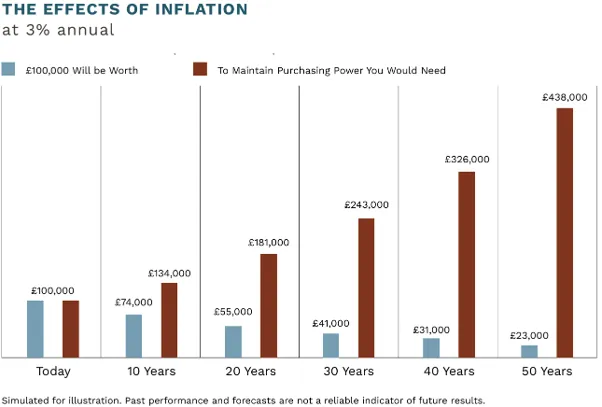
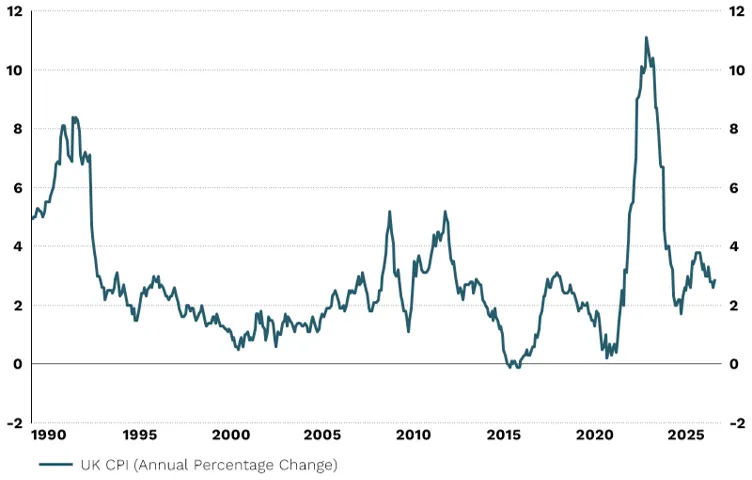
That matters because the T. Bailey multi-asset funds are run on the same long-term approach T. Bailey uses to preserve and grow its founders’ own wealth. It’s for these reasons that the funds use CPI+ benchmarks, which measure performance against inflation with a target of achieving growth above it.
“You do not want to find, in five or 10 years’ time, that what you have saved has less spending power than when you started,” says T. Bailey CEO Elliot Farley. “Inflation is a real phenomenon that investors see and feel in their pocket.”