Asia takes the strain
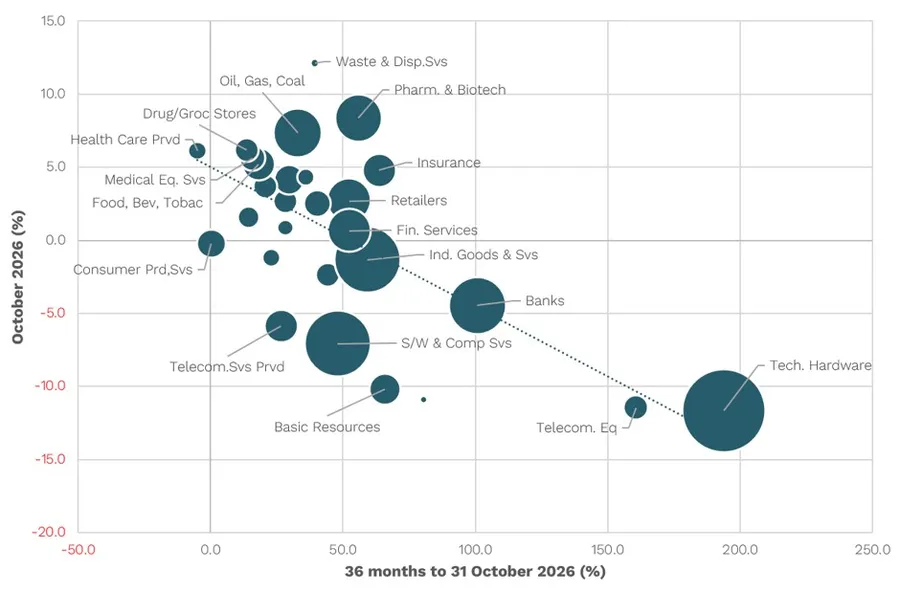
Asia Pacific and emerging market equities fell sharply over the month, with Korean technology shares reversing gains from earlier in the year despite strong results from Samsung and SK Hynix, modest valuations, and healthy near-term profit expectations. However, the question remains how long those profits can last if AI developers struggle to raise capital and infrastructure spending slows.
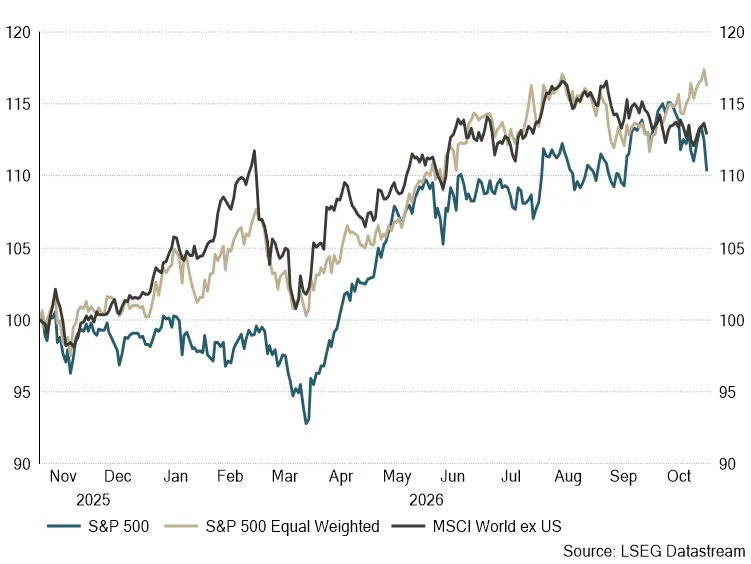
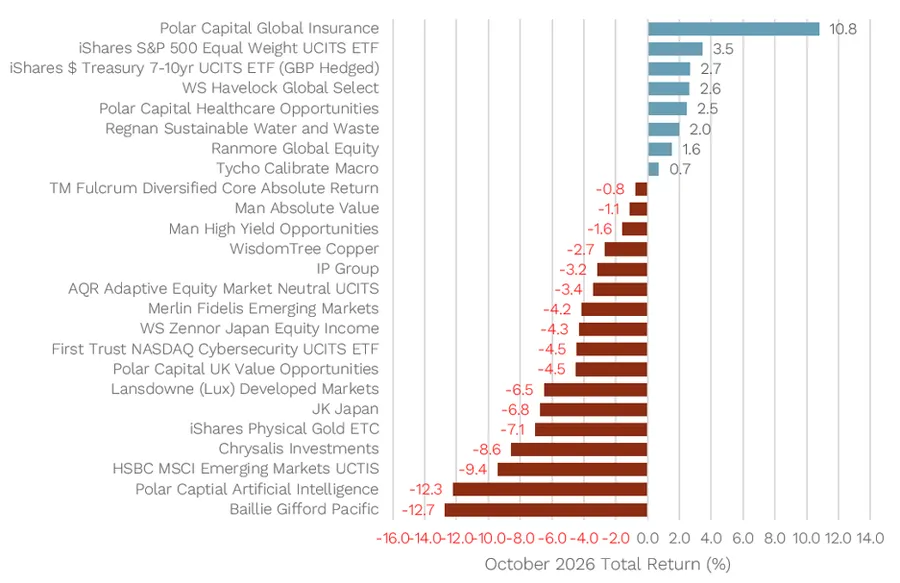
The Baillie Gifford Pacific Fund, with a sizeable allocation to Samsung, TSMC, SK Hynix and MediaTek, fell 12.7% against 7.9% for the average Asia Pacific ex Japan fund, whilst the HSBC MSCI Emerging Markets ETF fell 9.4%. The Merlin Fidelis Emerging Markets Fund fell a more modest 4.2% against 9.1% for the average emerging market fund as its manager owns relatively few of the chipmakers that dominate the index, albeit that has meant lagging in months such as August and September when such shares rallied strongly. In Japan, WS Zennor Japan Equity Income (-4.3%) again fell by less than the more growth-oriented JK Japan Fund (-6.8%).
Rates and bonds under pressure
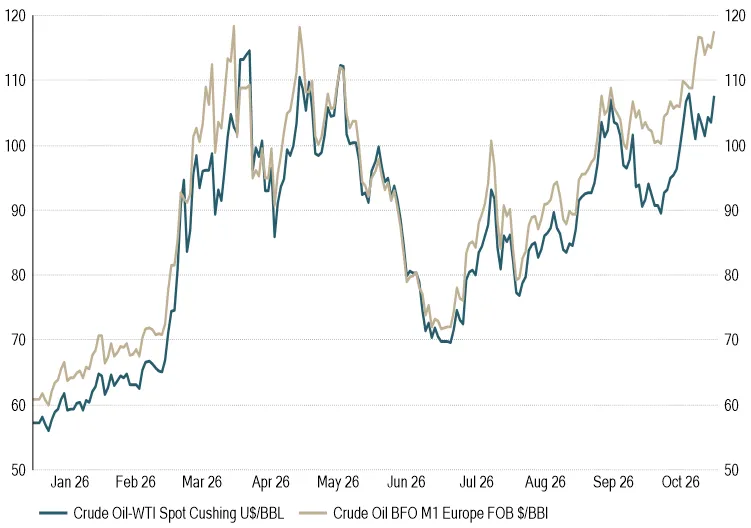
The US Federal Reserve held its policy rate at 3.75-4.00% a month after its first increase since 2023, with two committee members voting for a further rise and Chair Kevin Warsh offering little reassurance that the cycle has ended, so that markets continue to expect an increase in December. Recent economic data explains the caution, as September payrolls slowed to 29,000 and unemployment rose to 4.2%, yet third-quarter GDP grew at an annualised 3.4% and consumer prices rose 0.6% in September, lifting annual inflation to 3.7% with petrol accounting for more than half of the increase.
Other central banks faced similar dilemmas, with India and Canada raising rates, the ECB holding its deposit rate at 2.5% with a December increase still expected, and the Bank of Japan holding at 1.25% whilst signalling that it could tighten as soon as December.
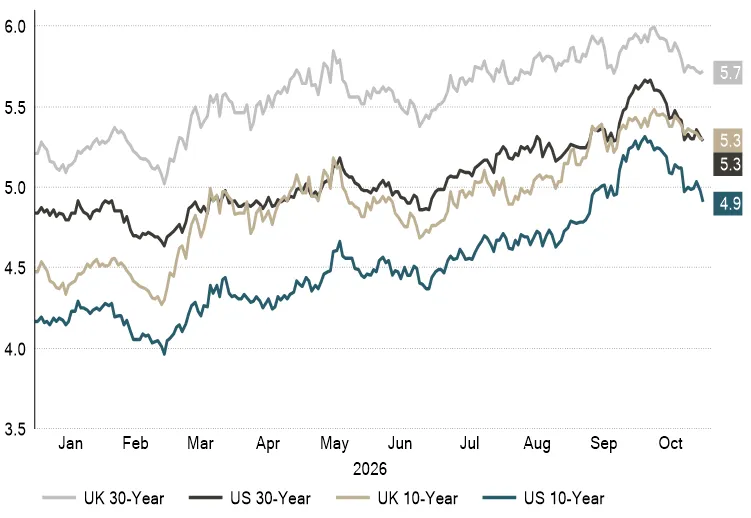
Government bonds were volatile, with long-dated yields approaching multi-decade highs early in the month before a flight to safety helped US Treasuries recover, the 10-year yield falling back below 5% on 22 October and recording its largest monthly decline since 2023, which lifted the iShares $ Treasury Bond 7-10yr ETF (GBP hedged) by 2.7% and recovered most of September's loss. As we argued in our weekly update of 5 October, higher yields have restored income without making every maturity equally attractive, which is why we continue to prefer short and intermediate maturities rather than a wholesale return to long duration.
Fiscal credibility remained the concern in the UK, where the 30-year gilt yield briefly exceeded 6% and the 10-year reached about 5.53% early in the month, as inflation rose to 3.5% and public debt passed £3tn ahead of John Healey's first Budget on 28 October. The Budget proved cautious, meeting the government's borrowing rules (albeit with fiscal headroom reduced from £24bn to £15bn), raising taxes on banks, savings and landlords, and easing energy bills. The market reaction was muted, with the 10-year yield easing to around 5.3%. France was a further concern, with the 10-year yield rising above 5%, a wider spread over Bunds, and negative outlooks from both Moody's and Fitch.