Gold and bonds, down together
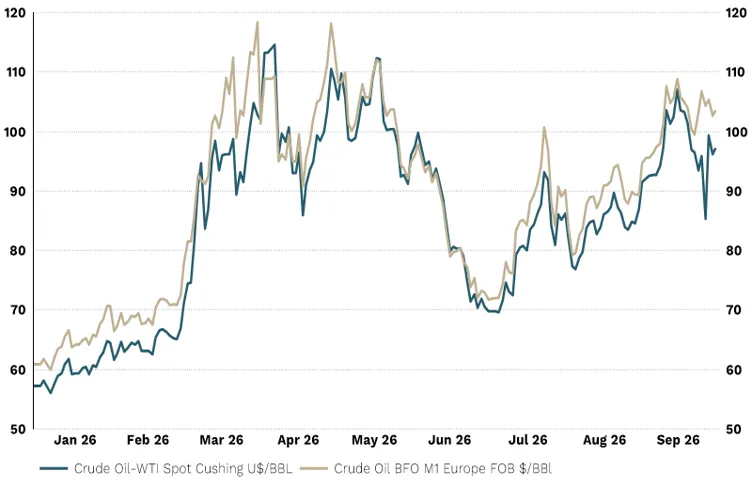
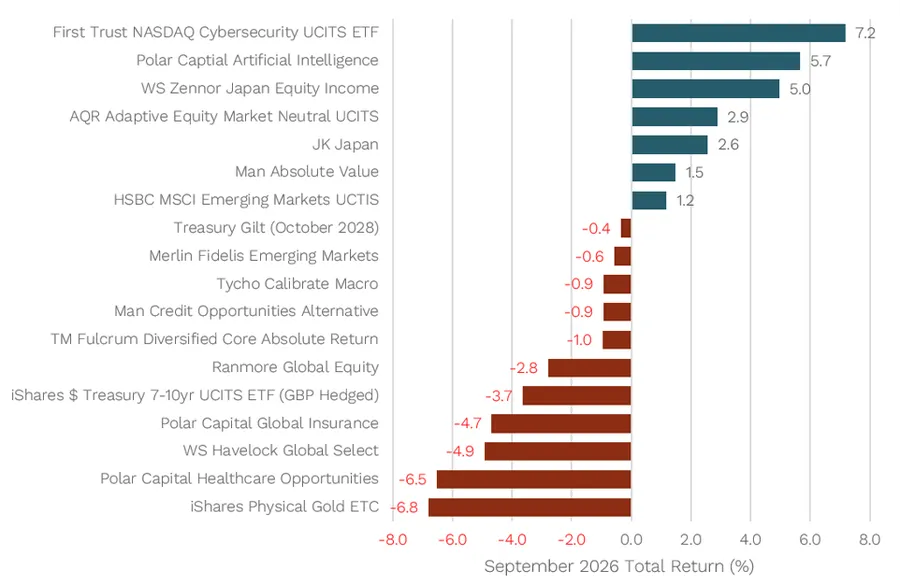
Gold ended September at US$4,153 an ounce, down 6.6% on the month. It had risen to about US$4,360 mid-month, subsequently falling as oil, yields and the US dollar rose together. The iShares Physical Gold ETC lost 6.8% in sterling, giving back a little more than half of August's 12.0% gain. It remains a notable position in the Multi-Asset funds as a real asset allocation alongside copper, and is held for geopolitical shocks and for periods of fiscal stress that erode confidence in currencies and bonds, rather than for months when real yields rise.
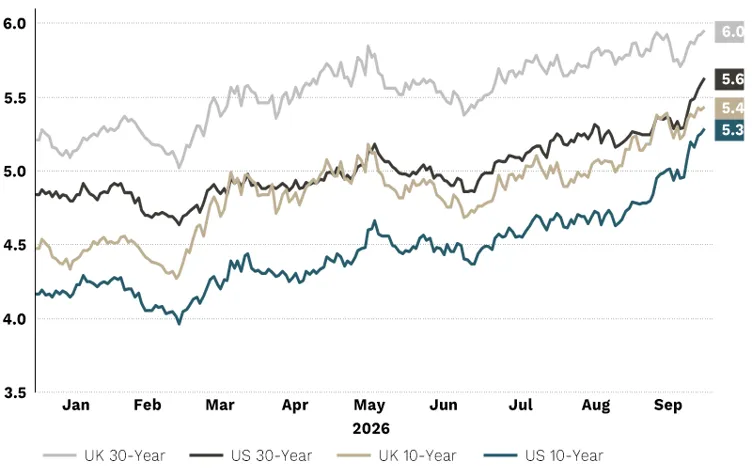
Bonds were also weak, but the shorter the maturity, the less was lost. The 2028 gilt held in the Multi-Asset funds fell 0.4% while the iShares $ Treasury Bond 7-10yr ETF (Hedged) fell 3.7%.
Performance across the absolute return funds held in the multi-asset portfolios was mixed. The AQR Adaptive Equity Market Neutral UCITS Fund returned 2.9% and the Man Absolute Value Fund 1.5%. The TM Fulcrum Diversified Core Absolute Return Fund, Man Credit Opportunities Fund and the recently introduced Tycho Calibrate Macro Fund each lost around 1% over the month.
AI's record results
The heads of several AI companies, including Dario Amodei of Anthropic, with support from Sam Altman of OpenAI and Elon Musk, called for developers to slow their work on the most advanced AI models, recognising a need for guardrails to the technology. Despite an initial pullback on the news, a week later the technology heavy Nasdaq Composite Index closed at a record high.
Reported results from companies within the theme have remained strong. Broadcom’s revenue rose 86% and it raised its fiscal 2027 AI chip revenue target to about US$115bn. On 30 September Micron reported record revenue of US$54.2bn, guided to US$61.5bn for the next quarter and said customer commitments under long-term supply agreements had risen to US$32bn.
However, constraints to the growth of AI technology are now becoming apparent. Oracle was reported to have issued a force majeure notice on its Project Jupiter data centre in New Mexico because it may not be able to secure power. OpenAI cancelled the October release of GPT-6.1 Astra on safety grounds, less than a month after saying its predecessor could sometimes disguise its reasoning, and on 30 September the US Federal Trade Commission opened an inquiry into AI labs including OpenAI and Anthropic.
The primary exposure to the theme within the T. Bailey funds of funds is through the Polar Capital Artificial Intelligence Fund, which returned 5.7% but remains down 8.8% over three months. The First Trust Nasdaq Cybersecurity ETF held within the T. Bailey Global Thematic Equity Fund returned 7.2% after 9.6% in August and is up 47.7% this year, leading us to take profits on part of the position.
How the T. Bailey portfolios fared
Across the T. Bailey funds of funds, healthcare exposure and gold were the weakest performers over the month. Polar Capital Healthcare Opportunities fell 6.5% and was the largest detractor in the Global Thematic Equity fund, while gold was the largest in the multi-asset funds. Two of the healthcare sector’s biggest names had bad days: Novartis fell nearly 11% on 8 September after a second failed trial and Novo Nordisk fell 7.7% on 21 September after its capital markets day. Polar Capital Global Insurance fell 4.7% following a strong start to the quarter, and WS Havelock Global Select (-4.9%) and Ranmore Global Equity (-2.8%) gave back part of a strong July and August.
The Polar Capital Artificial Intelligence Fund was the largest contributor in all three funds of funds by virtue of sizing and performance. The WS Zennor Japan Equity Income Fund returned 5.0%, ahead of JK Japan at 2.6% for the third month running. The Merlin Fidelis Emerging Markets Fund was flat while the HSBC MSCI Emerging Markets ETF gained 1.2%. The former's manager owns few of the Asian chipmakers that represent a large proportion of the index, thus providing useful diversification of return drivers.